

A clear PVC table cover is a way to protect your dining table, office desk or kitchen countertop while still showing the original surface. The clear PVC table cover helps guard against food spills, watermarks, dust and everyday scratches without hiding the beauty of your furniture.
Improper cleaning can make a clear PVC table cover look cloudy, dull or hazy, over time. Harsh chemicals, abrasive scrubbers or excessive heat can damage the clarity and overall appearance of the PVC table cover.
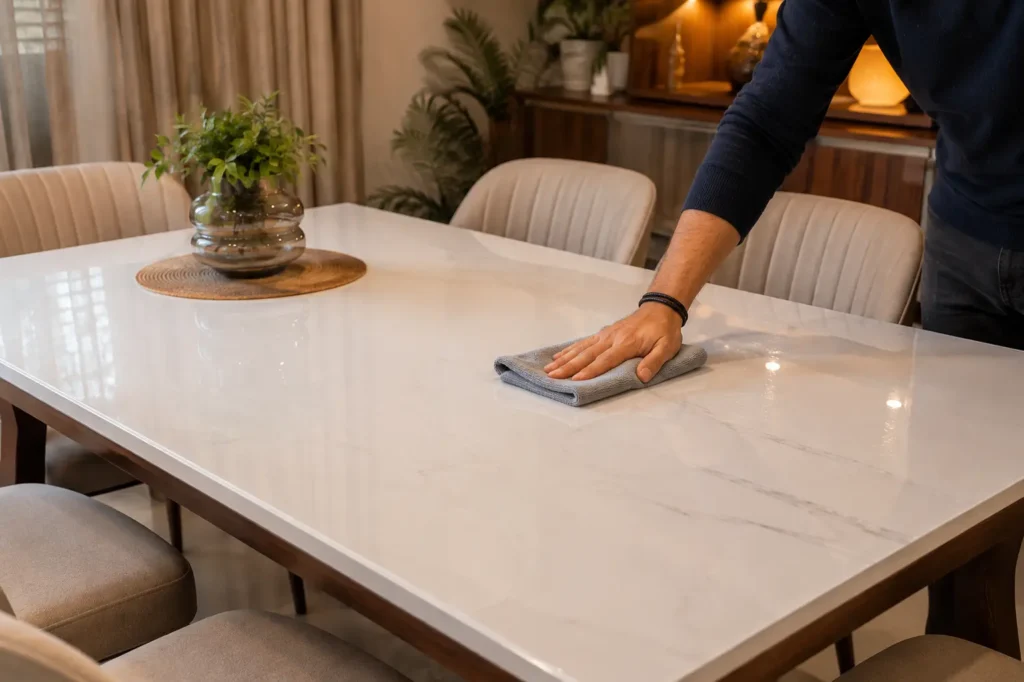
The best way to clean a PVC table cover is to use a soft microfiber cloth, lukewarm water and a small amount of mild dish soap. Gently wipe the surface of the PVC table cover. Then remove any soap residue with a damp cloth. Finally dry the cover thoroughly with a towel.
With the cleaning routine you can keep the transparency, appearance and usability of the clear PVC table cover for longer.
How Do You Clean a Clear PVC Table Cover Without Making It Cloudy?
You can clean a clear PVC table cover in five simple steps using mild soap and water. Avoid harsh chemicals, rough cleaning tools, and excessive pressure.
Step 1: Remove Loose Dust and Crumbs
Start by removing food particles, dust, and other loose debris from the surface. Use a soft, dry microfiber cloth to wipe the cover gently.
This step is important because rubbing crumbs or small particles across the surface may create fine scratches.
If the cover has visible dirt, lightly dampen the cloth before wiping instead of pressing hard against the material.
Step 2: Prepare a Mild Cleaning Solution
Mix a few drops of mild dishwashing liquid with lukewarm water in a clean bowl.
Avoid concentrated detergents or products containing strong solvents. A gentle solution is usually sufficient to remove fingerprints, food residue, and everyday grease.
Do not use boiling or excessively hot water, as high temperatures may affect the PVC material.
Step 3: Wipe the Surface Gently
Dip a soft microfiber cloth into the cleaning solution and wring it out so that it is damp rather than dripping wet.
Wipe the PVC surface using gentle, even movements. Pay attention to areas around dining plates, glasses, kitchen appliances, and frequently touched edges.
For sticky food spills, place the damp cloth over the affected area briefly to loosen the residue. Then wipe it away without scraping or scrubbing aggressively.
Step 4: Remove Soap Residue
Use another clean cloth dampened with fresh water to wipe the surface again.
This step helps remove leftover detergent that could otherwise dry into a cloudy film. If your tap water leaves mineral spots, use distilled water for this final wipe.
Step 5: Dry With a Soft Cloth
Finish by drying the cover with a clean, lint-free microfiber towel.
Gently remove excess moisture, paying particular attention to the edges and corners. Proper drying helps prevent watermarks and keeps the transparent surface looking neat.
Allow the cover to air out briefly before placing objects back on the table.
What Should You Avoid When Cleaning a Transparent PVC Table Cover?
To maintain clarity, avoid cleaning methods that may scratch, soften, discolor, or leave residue on the material.
Can You Use Glass Cleaner on PVC?
Not every glass cleaner is suitable for PVC. Some formulas contain alcohol, ammonia, solvents, or other ingredients that may affect certain plastic surfaces.
Check the product label and the cover manufacturer’s recommendations before using a glass cleaner. Mild soap and water remain the better default option.
Can You Use a Rough Sponge or Scrubber?
No. Rough sponges, steel wool, scouring pads, and abrasive cleaning powders can leave tiny scratches that scatter light and make a transparent cover appear cloudy.
Use a clean, soft microfiber cloth instead.
Should You Use Hot Water or a Hair Dryer?
Avoid excessive heat. Very hot water, hair dryers, irons, and direct heat sources may distort or damage PVC, depending on its thickness and formulation.
Lukewarm water and natural drying are more suitable for routine care.
Is It Safe to Scrape Off Dried Food?
Avoid using knives, blades, or sharp tools to remove dried food. Instead, place a damp cloth over the residue for a short time and wipe it away gently once it softens.
How Often Should You Clean a Clear PVC Table Cover?
The ideal cleaning frequency depends on how often the table is used.
- Daily: Wipe away fresh spills, crumbs, fingerprints, and food residue.
- Weekly: Clean the entire surface with diluted mild soap and water if the cover receives regular use.
- After sticky spills: Clean the affected area promptly to prevent residue from accumulating.
- Occasionally: Check underneath the cover for trapped dust, moisture, or food particles.
For dining tables and kitchen surfaces, regular light cleaning is generally better than waiting until dirt becomes difficult to remove.
If the cover is removable, follow the manufacturer’s guidance before lifting, washing, or repositioning it. Avoid dragging it across the table, as trapped particles may scratch either surface.
Conclusion
Keeping a clear PVC table cover transparent is not something that needs cleaning products or complicated methods. A little mild dish soap, some water, a soft microfiber cloth and proper drying are usually all that is needed to get rid of everyday dirt while keeping the cover clear.
Do not use chemicals, abrasive scrubbers, too much heat or rough scrubbing because these things can cause cloudiness and damage the surface. Taking care of the table cover on a basis can help it stay nice to look at and useful, for daily use.
At Qlarity Covers picking the transparent PVC table cover and following the right cleaning routine can help you keep your furniture safe while also keeping it clean and clear.